Inquiry

Project Review

Machining

Quality Control

Pass/Fail

Delivery
Analysis of Mining Transformer Faults
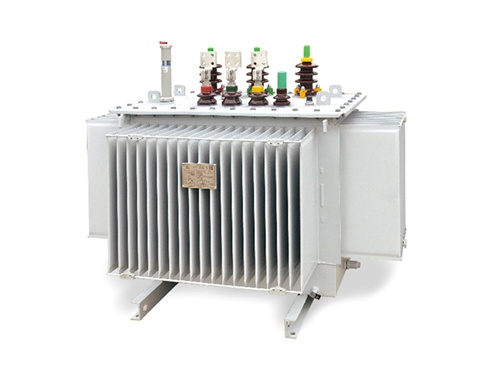
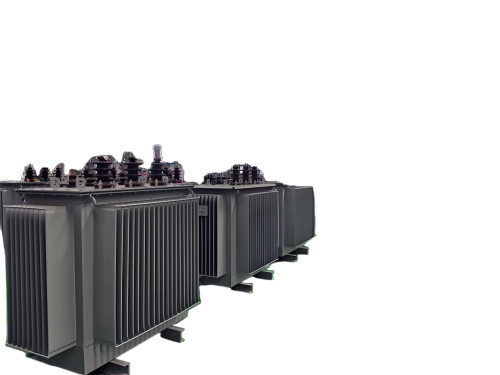
Mining transformers are core power supply equipment for underground and open-pit mining operations, operating in harsh environments characterized by high humidity, dust, vibration, and frequent load fluctuations. These conditions make mining transformers prone to various faults, which directly affect the safety and continuity of mining production. This analysis focuses on fault classification, cause analysis, characteristic manifestations, and preventive measures for mining transformers, with a focus on technical parameters and mechanism principles.
1. Classification of Mining Transformer Faults
Mining transformer faults are divided into two major categories based on the fault location and nature, which is consistent with the fault classification logic of general transformers but has obvious industry characteristics:
| Fault Category | Subtypes | Typical Occurrence Scenarios |
|---|---|---|
| Electrical Faults | Winding short circuit (inter-turn, inter-phase, ground) | Overload, insulation aging, overvoltage impact |
| Tap changer fault | Frequent load switching, poor contact of tap contacts | |
| Core grounding fault | Core insulation damage, metal foreign matter intrusion | |
| Bushing flashover/breakdown | Surface pollution, insulation moisture, overvoltage | |
| Non-electrical Faults | Oil-immersed transformer oil fault | Oil aging, moisture ingress, oil leakage |
| Cooling system failure | Blockage of radiator, damage of cooling fan/oil pump | |
| Mechanical fault | Vibration damage of winding, loosening of clamping parts, tank deformation |
2. Cause Analysis and Characteristic Manifestations of Key Faults
2.1 Winding Short-Circuit Fault
Core Causes
1. Insulation aging:Mining environments have high humidity and large temperature differences, accelerating the aging and embrittlement of winding insulation paper/film; long-term overload operation leads to excessive winding temperature, further deteriorating insulation performance.
2. Overvoltage impact:Lightning overvoltage or switching overvoltage in mining power grids breaks down the weak parts of winding insulation, causing inter-turn short circuits.
3. Foreign matter intrusion:Metal scraps, coal dust, and other conductive foreign matters enter the transformer interior, causing insulation piercing and short circuits.
Characteristic Manifestations
Electrical performance changes:The no-load current increases significantly, the three-phase current becomes unbalanced; the transformer impedance voltage decreases, and the load loss increases sharply.
Operating phenomenon:The transformer emits abnormal "buzzing" noise, the oil temperature rises rapidly; in severe cases, the oil conservator produces oil spray, and the gas relay acts to trip the protection device.
2.2 Tap Changer Fault
Mining transformers often use on-load tap changers to adapt to frequent load changes in mining operations, and this component is a high-fault area.
Core Causes
1. Poor contact:Abrasion of contact surfaces, pollution by coal dust and oil sludge, leading to increased contact resistance and local overheating.
2. Mechanical wear:Frequent switching causes wear of the tap changer's gear mechanism, positioning deviation, resulting in incorrect tap switching.
3. Insulation damage:Moisture ingress into the tap changer chamber causes insulation breakdown between taps.
Characteristic Manifestations
The transformer's output voltage fluctuates abnormally and cannot be adjusted stably; local overheating causes the oil temperature to rise, and the dissolved gas in the oil (such as acetylene, methane) exceeds the standard.
In severe cases, arcing occurs between taps, triggering gas protection or differential protection tripping.
2.3 Core Grounding Fault
The iron core of the transformer must be single-point grounded; multi-point grounding will form a circulating current in the core, leading to overheating faults.
Core Causes
1. Insulation damage:The insulation pad between the core and the iron yoke is worn or cracked due to vibration, resulting in multi-point grounding.
2. Foreign matter adhesion:Conductive foreign matters (such as metal wires, coal dust) adhere to the core surface, connecting the core and the tank wall.
Characteristic Manifestations
The core grounding current exceeds the standard (normal value is generally less than 100mA); the local temperature of the core rises, causing the oil temperature to increase; the dissolved gas in the oil shows an increase in carbon monoxide and carbon dioxide.
2.4 Oil Fault (for Oil-Immersed Mining Transformers)
Oil-immersed transformers rely on transformer oil for insulation and heat dissipation, and oil quality degradation is a common fault in mining environments.
Core Causes
1. Moisture ingress:Poor sealing of the transformer tank, conservator, or bushing leads to moisture intrusion in high-humidity mining environments, reducing the oil's dielectric strength.
2. Oil aging:Long-term operation causes oxidation of transformer oil, generating acidic substances and sludge, which adhere to windings and radiators, affecting insulation and heat dissipation.
3. Oil leakage:Vibration causes loosening of flange connections or damage to sealing gaskets, resulting in oil leakage.
Characteristic Manifestations
The breakdown voltage of transformer oil decreases (the standard value for new oil is ≥35kV); the oil color turns dark brown, and sludge precipitates; oil leakage leads to a drop in oil level, triggering the oil level relay to alarm.
3. Fault Diagnosis Methods for Mining Transformers
A combination of on-line monitoring and off-line testing is adopted to realize early fault warning and accurate positioning:
1. Gas Chromatography Analysis (DGA):Detect the type and content of dissolved gases in transformer oil. For example, a large amount of acetylene indicates arc discharge faults; high methane and ethane indicate overheating faults. This is the core method for diagnosing internal faults of oil-immersed transformers.
2. Electrical Testing
Winding resistance measurement:Unbalanced three-phase winding resistance indicates poor contact of windings or tap changers.
No-load and load test:Abnormal no-load current and loss indicate core faults; abnormal load loss indicates winding short-circuit faults.
Insulation resistance and dielectric loss tangent (tanδ) test:A significant decrease in insulation resistance indicates insulation moisture or aging; an increase in tanδ indicates insulation deterioration.
3. On-line Monitoring Technology:Install sensors to monitor oil temperature, winding temperature, oil level, gas relay status, and partial discharge in real time. For underground mining transformers, explosion-proof type monitoring equipment must be used.
4. Visual Inspection:Check for oil leakage, abnormal noise, bushing pollution, and deformation of the tank; for dry-type mining transformers, check for discoloration and cracking of the epoxy resin insulation layer.
4. Preventive Measures for Mining Transformer Faults
Aiming at the harsh operating conditions of mining transformers, preventive measures should focus on environmental improvement, operation management, and regular maintenance:
1. Optimize the Operating Environment
Underground transformers should be installed in dedicated, dry, and well-ventilated transformer chambers to reduce humidity and dust intrusion; set up dust-proof and moisture-proof devices.
Avoid frequent overload operation; configure the transformer capacity according to the mining load characteristics, and adopt a load balancing strategy.
2. Strengthen Operation Management
Regularly check the operating parameters (voltage, current, temperature, oil level) and record them; if abnormal data is found, stop the machine for inspection in time.
Reduce the number of unnecessary tap changer switchings; conduct contact resistance testing of tap changers after each switching.
3. Regular Maintenance and Testing
Oil maintenance:Regularly perform oil sampling and testing; if the oil quality deteriorates, carry out oil filtration or oil change; check the sealing performance of the transformer to prevent moisture ingress.
Electrical maintenance:Perform winding resistance, insulation resistance, and DGA tests on a regular basis (the cycle can be shortened according to the mining environment); check the core grounding current and eliminate multi-point grounding faults in time.
Mechanical maintenance:Tighten the clamping parts of windings and cores to reduce vibration damage; clean the radiator and cooling fan to ensure unobstructed heat dissipation.
4. Improve Protection Configuration
Configure complete protection devices: gas protection (for oil-immersed transformers), differential protection, overcurrent protection, over-temperature protection, and earth fault protection.
Ensure that the protection devices are calibrated regularly and the action characteristics match the transformer parameters to avoid misoperation or refusal to operate.
5. Special Requirements for Mining Transformers
Compared with general-purpose transformers, mining transformers have higher requirements for fault resistance:
Explosion-proof performance:Underground mining transformers must comply with explosion-proof standards (such as Ex d I Mb) to prevent spark ignition of flammable gas mixtures.
Corrosion resistance:The tank and external components should be treated with anti-corrosion coating to resist corrosion from humid and acidic mining environments.
Vibration resistance:The internal structure (windings, cores) should be reinforced to withstand vibration from mining equipment.

The main products include oil immersed transformers, dry-type transformers, power transformers, amorphous alloy transformers, mining transformers, box type substations, high and low voltage switchgear and supporting products
Add: South Head of Mount Huangshan Road, Liaocheng Development Zone, Shandong, China
Email:derun@drtransformer.com
Tel: +86 13706354419
 English