Inquiry

Project Review

Machining

Quality Control

Pass/Fail

Delivery
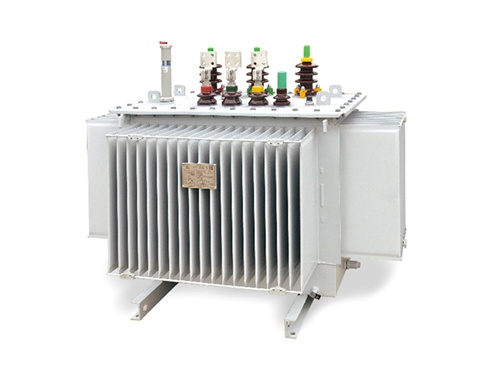
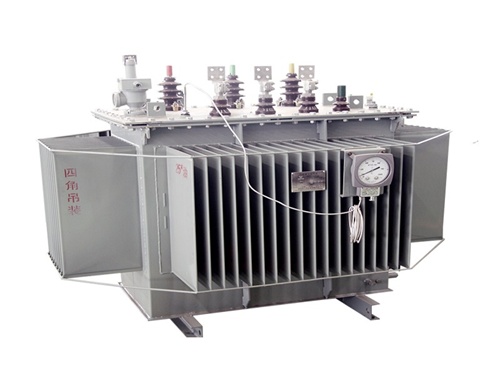
Characteristics of Oil-Immersed Transformers
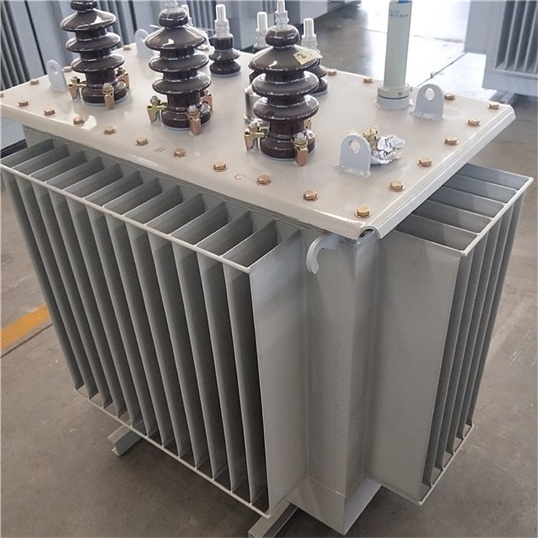
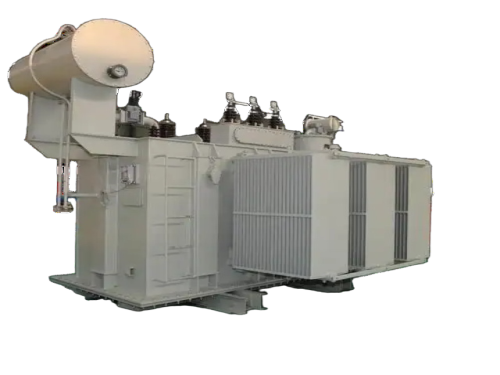
Oil-immersed transformers are the most widely used type of power transformer, relying on insulating oil for heat dissipation, insulation, and arc suppression. They are widely applied in power generation, transmission, distribution, and industrial power supply due to their mature technology, high reliability, and cost-effectiveness. Below is a detailed analysis of their core characteristics, categorized by structure, performance, operation, and application:
1. Core Structural Characteristics
1.1 Insulation System: Oil-Paper Insulation (Core Advantage)
Insulating Medium: Mineral oil (or synthetic insulating oil) serves as both insulation and heat transfer medium. It has high dielectric strength (≥35 kV/2.5 mm) and good compatibility with cellulose insulation (paper, cardboard, pressboard) used in windings and core.
Insulation Structure: Windings are wrapped in insulating paper, and gaps between windings, windings and core, and windings and tank are filled with insulating oil. The oil-paper combination provides excellent long-term insulation stability (service life up to 20–30 years under normal conditions).
Arc Suppression: Insulating oil has good arc-quenching performance, which helps suppress internal partial discharges and protect insulation from breakdown.
1.2 Heat Dissipation Structure
Basic Cooling Method (ONAN: Oil Natural, Air Natural): Heat generated by core and windings is transferred to the oil, which rises naturally (convection) to the tank surface, then dissipates to the air through radiation and convection.
Enhanced Cooling Methods:
ONAF (Oil Natural, Air Forced): Equipped with axial fans to blow air over the tank radiator, improving heat dissipation capacity by 30–50%.
ONAF/ODAF (Oil Forced, Air Forced): Oil is circulated by pumps through external radiators, with fans forcing air flow—suitable for large-capacity transformers (≥10 MVA).
ONAF/ODWF (Oil Forced, Water Forced): Used in high-power, high-temperature environments (e.g., industrial plants), with water cooling for radiators.
2. Performance Characteristics
2.1 Advantages
2.1.1 High Capacity and Voltage Rating
Suitable for large-capacity (up to hundreds of MVA) and high-voltage (up to 1000 kV) applications, meeting power grid transmission and industrial large-load power supply needs.
2.1.2 Excellent Heat Dissipation Efficiency
Insulating oil has high thermal conductivity (≈0.12 W/(m·K)), 5–8 times that of air, enabling efficient heat transfer from core/windings to the tank. For the same capacity, oil-immersed transformers have smaller volume and lower temperature rise than dry-type transformers.
2.1.3 Good Insulation Performance and Long Service Life
Oil-paper insulation system has high breakdown voltage (≥40 kV/mm) and strong resistance to moisture and aging. Under proper maintenance (e.g., regular oil testing and replacement), service life can reach 25–30 years.
2.2 Limitations
2.2.1 Fire and Environmental Risks
Insulating oil is flammable (flash point ≈140°C). If the tank leaks or is damaged, oil may ignite, causing fires. Mineral oil may pollute the environment if leaked (synthetic insulating oil is more environmentally friendly but costly).
2.2.2 Installation and Maintenance Requirements
Requires outdoor or well-ventilated indoor installation (with fire prevention measures, e.g., oil sump, fire separation). Regular maintenance is needed: oil sampling testing (dielectric strength, moisture content, acidity), silica gel replacement in breathers, and leak inspection.
3. Operational Characteristics
3.1 No-Load and Load Loss
No-Load Loss (Iron Loss): Generated by core magnetization, relatively constant (related to voltage and frequency). Low-loss silicon steel sheets and optimized core structure reduce no-load loss (e.g., 1000 kVA oil-immersed transformer: \( P_0 ≈ 1.5–2.0 \, \text{kW} \)).
Load Loss (Copper Loss): Generated by winding resistance, proportional to the square of load current. Copper windings have lower load loss than aluminum windings. For large-capacity transformers, load loss is optimized by increasing conductor cross-section and using multi-strand conductors (mitigating skin/proximity effects).
3.2 Efficiency
Typical efficiency: 98.5–99.8% (higher than dry-type transformers for large capacities). Maximum efficiency occurs at 40–60% rated load (when no-load loss equals load loss).

The main products include oil immersed transformers, dry-type transformers, power transformers, amorphous alloy transformers, mining transformers, box type substations, high and low voltage switchgear and supporting products
Add: South Head of Mount Huangshan Road, Liaocheng Development Zone, Shandong, China
Email:derun@drtransformer.com
Tel: +86 13706354419
 English