Inquiry

Project Review

Machining

Quality Control

Pass/Fail

Delivery
What Makes Oil-immersed Transformer A Core Power Distribution Equipment
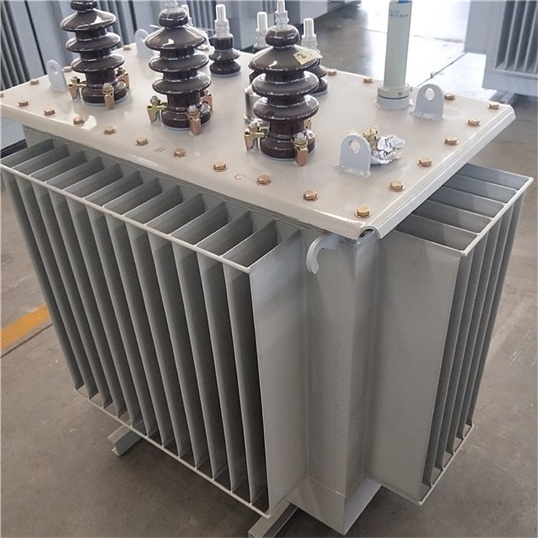
In the global power supply system, the power distribution link is the key bridge connecting power generation and power consumption. As a core equipment in this link, transformers are responsible for adjusting voltage levels, ensuring stable power transmission and meeting the diverse power needs of different users. Among the many types of transformers, oil-immersed transformers have long occupied a dominant position in the power distribution system with their unique performance advantages, wide application scenarios and mature technical system. From urban power grids to industrial parks, from power plants to rural power supply networks, oil-immersed transformers can be seen everywhere, undertaking the important task of reliable power distribution. This article will deeply explore the core reasons why oil-immersed transformers have become the core power distribution equipment, and analyze their irreplaceable value in the power system from multiple dimensions such as performance characteristics, application adaptability, technical maturity and economic benefits.
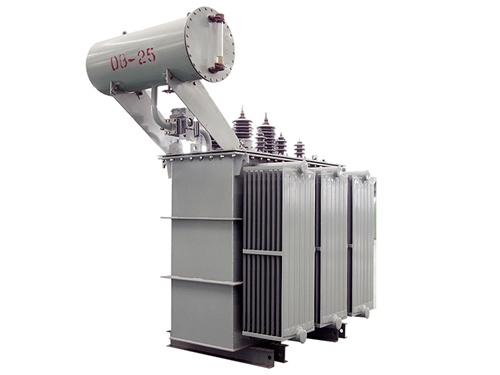
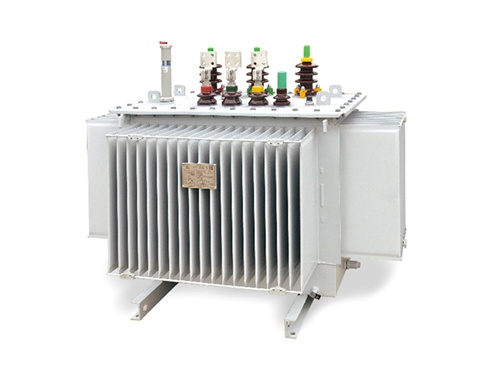
First of all, the excellent heat dissipation performance of oil-immersed transformers lays a solid foundation for their long-term stable operation, which is one of the core reasons for their status as core power distribution equipment. In the process of power transformation, transformers will inevitably generate energy loss, which is mainly converted into heat and causes the equipment temperature to rise. If the heat cannot be dissipated in time, the internal insulation material of the transformer will age acceleratedly, which will affect the service life of the equipment and even lead to faults such as short circuits. Oil-immersed transformers use insulating oil as the core heat dissipation and insulation medium. The insulating oil has excellent thermal conductivity. When the transformer is running, the heat generated by the core and windings is quickly absorbed by the insulating oil. The heated insulating oil rises due to the decrease in density, and the cold oil sinks to form natural convection, realizing efficient heat exchange. For large-capacity oil-immersed transformers, forced cooling methods such as oil pumps and fans can also be configured to further improve the heat dissipation efficiency. Compared with dry-type transformers that rely on air cooling, oil-immersed transformers have better heat dissipation capacity, especially suitable for high-load and long-term continuous operation scenarios. Data shows that the allowable temperature rise of oil-immersed transformers is 10-15℃ higher than that of ordinary dry-type transformers under the same capacity, which means they can bear higher loads and have stronger adaptability to complex power environments.
Secondly, the superior insulation performance of oil-immersed transformers ensures the safety and reliability of power distribution. Insulation performance is a key indicator to measure the quality of transformers, which directly determines the operational safety and service life of the equipment. The insulating oil used in oil-immersed transformers not only has good heat dissipation performance, but also has excellent insulating properties. It can fill the gaps between the internal components of the transformer, isolate the core, windings and other conductive parts from the tank, and prevent short circuits caused by partial discharge. At the same time, the insulating oil has a high breakdown voltage, which can effectively resist the impact of overvoltage and ensure the stable operation of the transformer under abnormal voltage conditions. In addition, during the long-term operation of the transformer, the insulating oil can also play a role in protecting the internal metal components, reducing the corrosion of the metal by moisture and oxygen in the air. The insulation system of oil-immersed transformers has been continuously optimized through long-term technical iteration. The combination of insulating oil and insulating paper, insulating board and other solid insulating materials forms a multi-layer insulation protection structure, which greatly improves the insulation reliability of the equipment. For power distribution systems that require high safety and stability, such as urban core power grids and industrial key production lines, the excellent insulation performance of oil-immersed transformers makes them the preferred equipment.
Thirdly, the strong load-bearing capacity and wide capacity range of oil-immersed transformers enable them to adapt to diverse power distribution needs, which is an important reason for their wide application. Power distribution systems in different scenarios have very different requirements for transformer capacity. For example, small rural power supply stations may only need transformers with a capacity of tens of kVA, while large industrial parks and urban substations require transformers with a capacity of hundreds of MVA. Oil-immersed transformers have a very wide capacity coverage, ranging from small-capacity distribution transformers of several kVA to large-capacity power transformers of hundreds of MVA, which can fully meet the power distribution needs of different scales. At the same time, oil-immersed transformers have strong overload capacity. In the case of short-term peak load, they can maintain stable operation without tripping, which effectively avoids power supply interruptions caused by sudden load increases. This performance is particularly important for power distribution scenarios with large load fluctuations, such as shopping malls, factories with intermittent production, and rural power grids with seasonal load changes. In addition, oil-immersed transformers can also be designed as on-load tap-changing transformers, which can adjust the output voltage in real time according to changes in load and grid voltage, ensuring the quality of power supply and further enhancing their adaptability in the power distribution system.
The mature technical system and rich application experience of oil-immersed transformers also consolidate their position as core power distribution equipment. Oil-immersed transformers have a history of more than 100 years of development. After long-term technical accumulation and practice optimization, their design, manufacturing, installation and maintenance technologies have been extremely mature. There are complete international and national standards for oil-immersed transformers, such as IEC 60076 and GB/T 1094, which standardize the technical parameters, performance requirements and test methods of the equipment, ensuring the quality and reliability of products from all links. For manufacturers, the mature production process of oil-immersed transformers can reduce production costs and improve production efficiency; for users, the mature maintenance system means that there are professional maintenance technologies and abundant spare parts resources, which can reduce the difficulty and cost of equipment operation and maintenance. In addition, after long-term application practice, oil-immersed transformers have been fully verified in various complex environments, such as high temperature, high humidity, high altitude and severe cold areas. The rich application experience enables manufacturers to better optimize product design according to different regional characteristics, and also allows users to have more confidence in the selection and use of oil-immersed transformers.
Economic benefits are another important factor that makes oil-immersed transformers the core power distribution equipment. Compared with other types of transformers with the same capacity, oil-immersed transformers have obvious advantages in initial investment cost. The raw materials and production processes of oil-immersed transformers are relatively mature, and the production cost is lower, which makes them more competitive in the market. For large-scale power distribution projects that require a large number of transformers, such as urban power grid transformation and rural power grid upgrading, choosing oil-immersed transformers can significantly reduce the initial investment and reduce the financial pressure of the project. At the same time, although oil-immersed transformers need regular oil testing and oil change during operation, their maintenance cost is still relatively low due to the maturity of maintenance technology and the low price of insulating oil. In terms of service life, oil-immersed transformers can generally operate stably for 25-30 years with proper maintenance, which is longer than that of many other types of transformers. The long service life means that the average annual cost of the equipment is lower, and it can bring more stable economic benefits to users in the long run. For power supply enterprises and industrial users that pursue cost control and long-term stable operation, the economic advantages of oil-immersed transformers are irreplaceable.
The wide adaptability to different application scenarios further enhances the core status of oil-immersed transformers in the power distribution system. Unlike some transformers that are only suitable for specific scenarios, oil-immersed transformers can adapt to a variety of complex working environments and application fields. In the field of urban power grids, large-capacity oil-immersed transformers are used in substations to realize the transformation and distribution of high-voltage power, ensuring the stable power supply of the entire urban area; in industrial production, oil-immersed transformers with strong overload capacity and high reliability are used to meet the power needs of large-scale equipment such as motors and production lines; in rural power supply networks, oil-immersed transformers with simple structure and easy maintenance are used to solve the problem of power supply in remote areas; in power plants, oil-immersed transformers are used as main transformers to connect the power generated by generators to the power grid. Even in some special environments, such as coastal areas with high salt fog and mining areas with more dust, oil-immersed transformers can still ensure normal operation through appropriate anti-corrosion and dust-proof treatment. This wide application adaptability makes oil-immersed transformers an indispensable core equipment in various power distribution scenarios.
It should be emphasized that although oil-immersed transformers have many advantages, they also have certain limitations, such as the risk of oil leakage and fire, and the need for a dedicated oil storage and maintenance space. However, with the continuous progress of technology, these limitations are being gradually overcome. For example, the use of high-quality sealing materials reduces the risk of oil leakage; the configuration of fire prevention devices such as oil storage pools and fire extinguishing systems improves the safety of the equipment; the optimization of product structure makes the layout of oil-immersed transformers more compact, reducing the occupied space. Compared with other types of transformers, oil-immersed transformers still have obvious comprehensive advantages in terms of performance, cost and application adaptability, which is the fundamental reason why they can maintain their core position in the power distribution system for a long time.
With the continuous development of the power industry, especially the rapid development of new energy power generation such as wind energy and solar energy, the power distribution system is facing new challenges and requirements. Oil-immersed transformers are also constantly upgrading and iterating to adapt to the new development trend. For example, the development of high-efficiency oil-immersed transformers with lower energy loss meets the requirements of energy conservation and emission reduction; the integration of intelligent monitoring technology realizes real-time monitoring of the operation status of transformers, improving the level of intelligent operation and maintenance; the research and development of special oil-immersed transformers suitable for new energy power generation scenarios solves the problem of power grid connection of new energy power. These technological upgrades will further enhance the core competitiveness of oil-immersed transformers and make them continue to play an important role in the future power distribution system.
To sum up, oil-immersed transformers have become the core power distribution equipment due to their excellent heat dissipation performance, superior insulation reliability, strong load-bearing capacity, wide capacity range, mature technical system, obvious economic benefits and wide application adaptability. These advantages enable them to meet the diverse needs of different power distribution scenarios, ensure the stable, safe and efficient operation of the power supply system, and lay a solid foundation for the development of the national economy and people's daily life. With the continuous progress of technology, oil-immersed transformers will continue to be optimized and upgraded, and their core position in the power distribution system will be more consolidated. For power supply enterprises, industrial users and engineering construction units, understanding the core advantages of oil-immersed transformers is of great significance for the rational selection of power distribution equipment and the construction of efficient and reliable power distribution systems.

The main products include oil immersed transformers, dry-type transformers, power transformers, amorphous alloy transformers, mining transformers, box type substations, high and low voltage switchgear and supporting products
Add: South Head of Mount Huangshan Road, Liaocheng Development Zone, Shandong, China
Email:derun@drtransformer.com
Tel: +86 13706354419
 English