Inquiry

Project Review

Machining

Quality Control

Pass/Fail

Delivery
Core Material Advantages: Why Amorphous Alloy Is Better For Transformers
Amorphous alloy has become a revolutionary core material in the transformer industry in recent years, breaking the traditional dominance of silicon steel and bringing a new upgrade to transformer performance, energy efficiency and long-term operation. For power grid construction, industrial production and commercial energy supply, the choice of transformer core material directly determines the equipment’s loss level, service life and operating cost. Compared with conventional core materials, amorphous alloy shows unique and irreplaceable advantages in all core performance indicators. This article will deeply analyze the core material advantages of amorphous alloy and fully explain why it is more suitable for manufacturing transformers than traditional materials.
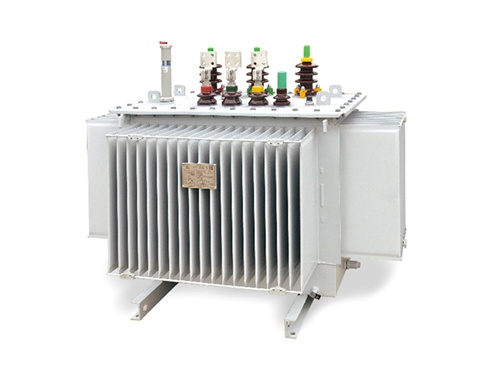
The core of a transformer is the core component of energy conversion, and its material performance directly affects the magnetic conductivity, loss value and operational stability of the transformer. Traditional transformers mostly adopt silicon steel as the core material, which has been widely used for a long time due to its good magnetic properties and mature processing technology. However, with the continuous improvement of global energy conservation and emission reduction requirements and the continuous upgrading of power equipment standards, the inherent defects of silicon steel, such as high no-load loss, have gradually become prominent, which can no longer meet the high-efficiency and energy-saving demand of modern power systems. Amorphous alloy, as a new type of soft magnetic material, is made by rapidly cooling molten alloy at a speed of 106 K/s, forming a disordered atomic structure without regular crystal lattice arrangement. This unique structure endows it with excellent magnetic properties, making it an ideal core material for high-efficiency transformers.
First of all, the most prominent advantage of amorphous alloy as a transformer core material is its ultra-low no-load loss, which is the core reason why it has become the first choice for energy-saving transformers. No-load loss refers to the energy loss generated by the transformer when it is no-load operation, which is mainly caused by the hysteresis loss and eddy current loss of the core material. The disordered atomic structure of amorphous alloy makes its magnetic domain wall move more easily, and the hysteresis loop area is much smaller than that of silicon steel, so the hysteresis loss is greatly reduced. At the same time, amorphous alloy has high resistivity, which can effectively inhibit the generation of eddy current in the core, thus reducing eddy current loss. Data shows that the no-load loss of amorphous alloy core transformers is only 20%~30% of that of traditional silicon steel core transformers of the same capacity. Taking a 1000kVA distribution transformer as an example, the annual no-load loss of a silicon steel core transformer is about 3000kWh, while that of an amorphous alloy core transformer is only about 700kWh, which can save a lot of electric energy every year. For large-scale power grids and long-term operating industrial and commercial equipment, this energy-saving effect can bring considerable economic benefits and significant environmental benefits, which is in line with the global low-carbon development trend.
Secondly, amorphous alloy has excellent magnetic permeability, which can improve the energy conversion efficiency and operational stability of transformers. Magnetic permeability is an important index to measure the ability of core materials to conduct magnetic flux. The higher the magnetic permeability, the easier the core is magnetized, and the higher the energy conversion efficiency of the transformer under the same magnetic field intensity. The unique amorphous structure makes the material have no crystal boundary resistance, and the magnetic flux can pass through the core more smoothly, so its initial magnetic permeability and maximum magnetic permeability are far higher than those of silicon steel. In practical operation, amorphous alloy core transformers can quickly respond to changes in input voltage and load current, maintain stable output voltage, and effectively reduce voltage fluctuation and harmonic pollution. For precision equipment, data centers and industrial production lines with high requirements for power quality, this stable performance can effectively protect the safe operation of terminal equipment and reduce the failure rate caused by power instability. In addition, the good magnetic permeability of amorphous alloy also enables the transformer to have better overload capacity, and can still maintain stable operation in a short-term overload state, which improves the adaptability of the equipment to complex working conditions.
Thirdly, amorphous alloy core materials have good temperature stability and corrosion resistance, which can extend the service life of transformers and reduce maintenance costs. The operating temperature of the transformer core will rise during long-term operation, and the magnetic properties of ordinary silicon steel will decline to a certain extent when the temperature changes, which may lead to increased loss and affect the service life of the equipment. Amorphous alloy has a wider operating temperature range, and its magnetic properties can remain stable in the temperature range of -50℃~150℃, which is not easy to be affected by temperature changes. This characteristic makes amorphous alloy core transformers adaptable to various harsh environments, whether in cold northern regions or hot southern areas, they can operate stably without frequent adjustment and maintenance. At the same time, amorphous alloy has strong corrosion resistance, and its surface can form a dense oxide film, which can resist the erosion of moisture, acid and alkali substances in the environment, avoid core rust and damage, and further extend the service life of the transformer. Compared with traditional silicon steel core transformers that need regular anti-corrosion maintenance, amorphous alloy core transformers have lower daily maintenance costs and longer service life, which can reduce the total life cycle cost of equipment for users.
Fourthly, amorphous alloy has good processing performance, which can meet the design and manufacturing requirements of transformers of different specifications and models. Although amorphous alloy is a brittle material, with the continuous maturity of processing technology, its forming and cutting processes have been continuously optimized, and it can be made into core components of various structures such as wound cores, which is suitable for the production of distribution transformers, power transformers and special transformers of different capacities. The wound core made of amorphous alloy has no air gap, which can further reduce magnetic leakage loss and improve the overall efficiency of the transformer. In addition, the thickness of amorphous alloy strip is thin (generally 0.025mm~0.03mm), which can be stacked flexibly according to the design requirements, and is suitable for the miniaturization and lightweight design of transformers. With the continuous expansion of urban power grid construction and the increasing demand for power equipment in industrial parks, the miniaturization of transformers can save installation space and reduce transportation and installation costs, and amorphous alloy core materials just meet this development trend. Compared with silicon steel, which has certain limitations in thin strip processing, amorphous alloy has more flexible processing adaptability, which can meet the personalized customization needs of different users.
Fifthly, amorphous alloy core transformers have better environmental protection and sustainability, which conform to the development concept of green power. In the production process of silicon steel, a lot of energy and resources are needed, and certain pollutants will be generated in the smelting and rolling processes. The production process of amorphous alloy is more energy-saving and environmentally friendly. The rapid solidification technology adopted can reduce energy consumption in the smelting process, and the material can be recycled and reused, which reduces the waste of resources. In the operation process, the ultra-low loss of amorphous alloy core transformers can reduce the consumption of electric energy, thus reducing the carbon emissions generated by power generation. Taking the national power grid transformation as an example, if all traditional distribution transformers are replaced with amorphous alloy core transformers, the annual energy saving will reach tens of billions of kWh, and the carbon emission reduction will be considerable. In addition, amorphous alloy does not contain toxic and harmful substances, and will not cause pollution to the environment during use and scrapping, which fully meets the requirements of green environmental protection. With the continuous improvement of global environmental protection policies, the environmental protection advantages of amorphous alloy will make it more widely used in the transformer industry.
In addition to the above core advantages, we also need to objectively view the current limitations of amorphous alloy, and clarify why these limitations do not affect its status as an excellent transformer core material. At present, the main defects of amorphous alloy are high initial cost and brittleness. The price of amorphous alloy strip is slightly higher than that of silicon steel, which leads to the higher initial purchase cost of amorphous alloy core transformers than traditional transformers. However, from the perspective of the whole life cycle, the ultra-low operating loss and maintenance cost of amorphous alloy core transformers can quickly offset the initial cost difference, and the longer the service time, the more obvious the economic benefits. For example, the payback period of amorphous alloy core transformers is generally 3~5 years, and the subsequent use process can bring continuous cost savings. In terms of brittleness, with the improvement of core winding technology and the optimization of protective measures, the impact of brittleness on the operation and transportation of transformers has been effectively controlled, and the safety and reliability of equipment have been fully guaranteed.
Compared with other alternative core materials, amorphous alloy also shows obvious comprehensive advantages. For example, ferrite core materials have low loss but low magnetic permeability and are only suitable for small transformers and high-frequency transformers, which cannot meet the demand of large-capacity power transformers. Nanocrystalline alloy has excellent magnetic properties, but its production cost is higher and the technology is not as mature as amorphous alloy, so it is difficult to be popularized on a large scale. Therefore, in the field of medium and large capacity transformers, amorphous alloy is the most cost-effective high-efficiency core material at present.
The application practice of amorphous alloy in the transformer industry has fully verified its excellent performance. In recent years, amorphous alloy core transformers have been widely used in urban distribution networks, rural power grids, industrial parks, commercial buildings, data centers, renewable energy power generation systems and other fields. In rural power grid transformation, amorphous alloy core transformers have solved the problem of high no-load loss of traditional transformers under light load operation, and realized energy saving and consumption reduction in rural power supply. In data centers with high power demand and high reliability requirements, amorphous alloy core transformers ensure stable power supply while reducing energy consumption, which helps data centers achieve green and low-carbon operation. In the field of renewable energy such as solar energy and wind energy, amorphous alloy core transformers can adapt to the fluctuation of new energy power generation, improve the efficiency of energy grid connection, and promote the consumption of clean energy.
With the continuous advancement of energy conservation and emission reduction policies and the continuous upgrading of power equipment technology, the demand for high-efficiency energy-saving transformers will continue to grow, and amorphous alloy as a core material will usher in a broader development space. In the future, with the continuous optimization of amorphous alloy production technology, the production cost will be further reduced, and its performance will be continuously improved, which will further enhance its competitiveness in the transformer core material market. At the same time, the combination of amorphous alloy core and new transformer technologies such as intelligent monitoring and digital control will promote the transformation of transformers to high-efficiency, intelligent and green development, and provide more reliable support for the construction of modern power systems.
To sum up, amorphous alloy has unique and irreplaceable core advantages as a transformer core material, including ultra-low no-load loss, excellent magnetic permeability, good temperature stability and corrosion resistance, flexible processing performance and green environmental protection. These advantages make amorphous alloy core transformers far superior to traditional silicon steel core transformers in energy efficiency, operational stability, service life and environmental protection. Although there are some limitations in initial cost and brittleness, they can be effectively compensated and solved through the advantages of the whole life cycle and technological progress. It is precisely these core advantages that make amorphous alloy the better choice for transformer core materials, and it will surely play a more important role in the development of the global transformer industry and the construction of green power systems in the future.

The main products include oil immersed transformers, dry-type transformers, power transformers, amorphous alloy transformers, mining transformers, box type substations, high and low voltage switchgear and supporting products
Add: South Head of Mount Huangshan Road, Liaocheng Development Zone, Shandong, China
Email:derun@drtransformer.com
Tel: +86 13706354419
 English